






































How to Use an Ottoman as a Coffee Table
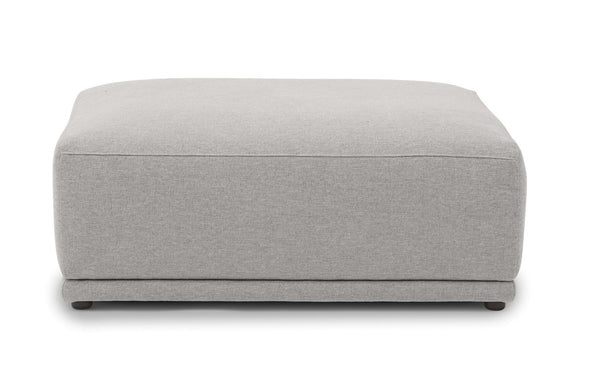
An ottoman can replace a conventional coffee table when you want a softer, more flexible living-room centerpiece. It can serve as a footrest, occasional seat, or tabletop, but the right setup depends on its height, upholstery, and how you use the room.
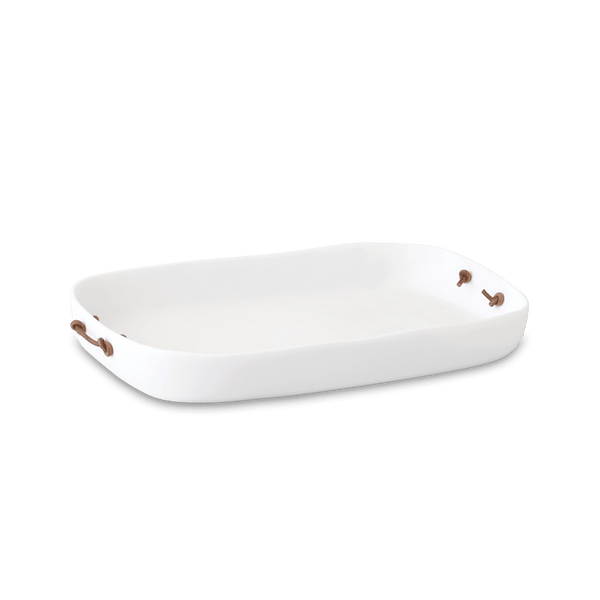
Quick answer: Choose an ottoman when soft edges, extra seating, and comfort matter most. Choose a coffee table when you need a firm, stable surface for drinks, books, and daily serving. A large tray can make an upholstered ottoman function more like a table.
| Choose an ottoman when… | Choose a coffee table when… |
|---|---|
| You want extra seating or a footrest | You need a consistently firm surface |
| Soft, family-friendly edges matter | Drinks and serving are frequent |
| You prefer a relaxed, layered room | You want a structured centerpiece |
| Flexible use is a priority | Display and storage are priorities |

How to Use an Ottoman as a Coffee Table
Begin with proportion. The ottoman should be large enough to relate to the sofa but should not fill the entire seating area. A useful starting point is one-half to two-thirds the length of the sofa’s main seating run. Leave 14–18 inches between the ottoman and the upholstery so people can sit, reach the surface, and move around it comfortably.
The top should sit near the height of the seat cushions or slightly lower. A very soft, overfilled ottoman works best as a footrest and occasional surface, while a firmer upholstered top handles trays and books more reliably.
Use a Tray for a Stable Surface
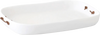
A tray is the simplest way to convert a soft ottoman into a practical tabletop. Choose one with a broad, flat base that will not sink deeply into the upholstery. A raised edge helps contain glasses, remotes, and small objects. Leave part of the ottoman uncovered so it can still function as a footrest or extra seat.
- For everyday drinks: Use a rigid tray with raised sides and coasters.
- For entertaining: Choose a tray that can be lifted away quickly when the ottoman is needed for seating.
- For styling: Keep accessories low and limited so the surface remains useful.
Ottoman vs. Coffee Table: Which Is Better?
An ottoman is usually better for relaxed rooms where comfort and flexibility are priorities. The upholstered surface softens a room with many hard materials and can be safer around young children. A traditional coffee table is better for frequent serving, display, storage, or tasks that require an unmoving surface.
You do not have to choose only one. A compact side table beside the sofa can hold drinks and lamps while the ottoman anchors the seating area. In a larger room, an ottoman can sit near one end of the sofa and a small table can serve the other seats.
Choosing the Right Shape and Size
Round ottoman coffee tables
A round ottoman improves circulation and works well with compact sofas, curved seating, and L-shaped sectionals.
Square ottoman coffee tables
A square ottoman suits a balanced seating group or the central opening of a U-shaped sectional. Check that every seat can reach it without sacrificing clearance.
Rectangular ottoman coffee tables
A rectangular ottoman follows the line of a standard sofa and provides generous surface area. It is often the easiest replacement for a conventional rectangular coffee table.
Best Materials for an Ottoman Coffee Table
Durable, tightly woven upholstery is easier to maintain than delicate or highly textured fabric. Leather develops character and can be wiped clean, while performance textiles offer stain resistance in busy family rooms. Tufting adds visual detail but creates a less even surface, so a sturdy tray becomes more important.
How to Style an Ottoman Coffee Table
Start with one tray and add only a few low objects, such as a small vase, a candle, or a short stack of books. Avoid tall arrangements that interrupt sight lines. Repeat a color or material from nearby pillows, lighting, or living room furniture.
If a firm surface better suits your habits, compare options in our coffee table collection. For sectional-specific proportions, read our guide to the best coffee table for a sectional.
Ottoman Coffee Table FAQs
Can you put drinks on an ottoman?
Yes, but place drinks on a rigid tray rather than directly on upholstery. The tray distributes weight, protects the fabric, and reduces spills.
How high should an ottoman coffee table be?
Aim for approximately the same height as the sofa seat or one to two inches lower.
How far should an ottoman be from the sofa?
Leave about 14–18 inches between the ottoman and the sofa.
Can an ottoman and coffee table be used in the same room?
Yes. Use them in separate seating zones or pair a small coffee table with an ottoman when the room is large enough to preserve clear walkways.
Is a tufted ottoman practical as a coffee table?
It can be, especially with a large tray. Deep tufting makes the surface less level, so choose a tray wide enough to bridge the soft areas securely.