





















































































Sectional Sofa Guide: Measure Your Room for the Perfect Fit
For those who want a lot of seating but one piece of furniture, the sectional is the one-stop shop solution. However, choosing the perfect sectional for your space goes beyond the simple need for ample space or the desire for an impactful, centralizing piece of furniture. Ensuring the correct size, the desired flow of the room, and the perfect amount of living room seating boils down to proper measurements and a well-designed sectional sofa. Luckily, HORNE has masterfully designed sectionals in our living room collection, and this is our sectional sofa guide to help you measure your room for the perfect fit.
Understanding Dimensions
Product images and the measurements we provide with all of our product descriptions are usually pretty accurate. However, some sectionals may have features that influence their overall footprint in the room. The Collar Sectional, for example, has a cushion that lays up over the backrest and bleeds outside of the frame. While it does not add that much extra to the measurements, it should be taken into consideration and some wiggle room allowed so the sectional comfortably fits within the allotted space.
However, the basics of understanding sectional dimensions starts with:
- Overall width and depth. These simple measurements are the best place to start. Depending on the size of your living room, you may need to scale down. And, as we mentioned above, add an inch or two to allow for some breathing space on all sides that will be up against a wall or another piece of furniture.
- Seat depth and height. Determining the seat depth will help you decide if the sectional meets functionality needs. Is it comfortable for everyone who visits to sit in and get back out of? Can you fit the throw pillows you love? And the height of the seat will factor into the type, size, and even style of the coffee table.
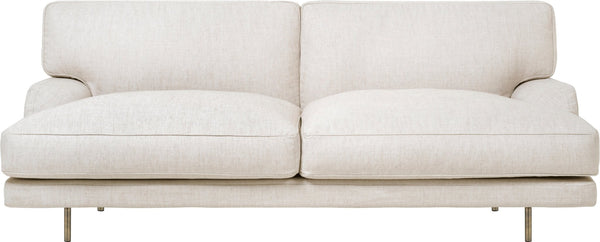
- Arm height. The height of the armrests is important for comfort considerations. Rooms intended to host long, late night gatherings may need a sofa with taller armrests. And if you want your sectional to help define the boundaries of the seating area, then arms can be that “wall” as opposed to more open designs like the Flaneur modules.
- Chaise length. Do not forget to measure and consider the chaise length. This is the primary addition that makes the sectional different and bit bulkier. Know the length and width of the chaise extension and allow the typical 14-18 inches of space around it for easy movement.

How to Measure Your Living Room
It may seem obvious, but the best place to start is to take measurements of the room’s basic dimensions. But every room, unless it is truly a simple square or rectangle, has some quirks and architectural items to work around.
- Don’t forget the doors. When marking down your room’s measurements, don’t forget to note the placement and size of the doors and windows. It is rare that sofas, especially sectionals, are placed in front of windows, so you’ll want to consider these in the arrangement of the furniture. Which brings us to...
- Draw the room as it really is. Even if you aren’t an artist or architect, draw up the room, with the doors, windows, fireplaces, switches, outlets, columns, built-ins, nooks, and angles just as it is. A rough sketch with proper measurements goes a long way to ensuring you are shopping for and selecting furniture that actually fits.
- Map the room layout. With painters tape, outline all furniture, or where new furniture will sit. Though the feel may be different, this will give you a good idea of how the piece fits and what space you may need to create around it to ensure good flow.
- Measure the delivery path. This is a bit secondary, but the delivery path is important. It may just be the number that determines if you need to find a flat-packed sectional or if you can choose one delivered completely built. Either way, take a few measurements of hallways, doorways, and tight corners so you can be prepared for anything.
- Add space for clearances. Every single measurement you take for placing furniture should take into consideration clearance. This clearance is what keeps the flow of your room intact, allows easy movement between and around pieces, and maintains that comfortable and welcoming atmosphere. As a practical starting point, allow 30 to 36 inches for important walkways and about 14 to 18 inches between seating and a coffee table. This, of course, will adjust for accessibility, household routines, reclining mechanisms, and furniture scale.

Sectional Sofa Guide
The very first thing to know about sectionals is the different configurations they offer.
The L-shaped sectional has a long run and shorter return. That is, the original sofa area is longer and the chaise extension is fairly short. These work really well in corners and as floating pieces in more open floorplans.
A sectional with full chaise is the ultimate lounger. Essentially creating two sofas without the visual weight of the extra piece of furniture, this is a good configuration narrower spaces. However, make sure it doesn’t block too much movement.

If you want some visual impact, the U-shaped sectional is perfect. Offering generous room and a conversation-pit feel, this is a great option for large living rooms designed for entertaining. You’ll want to find a good, appropriately-scaled coffee table for the middle.
Finally, the modular sectional is the best option for smaller, adaptable spaces, and for anyone who loves to rearrange furniture to suit the current need. Completely customize the configuration, choosing the length, number of extensions, and other elements to achieve the desired extra seating without the commitment to a static shape and size.
How Large Should a Sectional Be?
Unfortunately, there is not a one-size-fits-all answer to this question. Instead, it depends on the size of the living room, its function and circulation, and the placement of immovable elements like doors and windows.
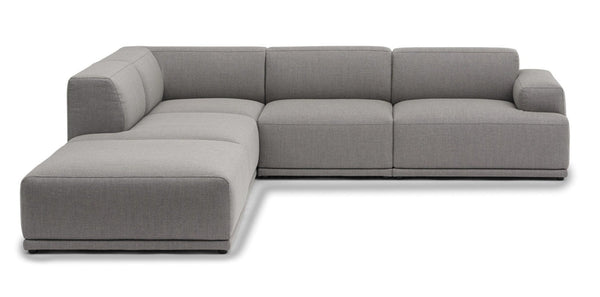
However, we can tell you that a small room benefits from a compact sectional like the Renfrew Loft Bi-Sectional or the Podium Sectional: 4-Seater. A medium room can easily handle a larger L-shaped sectional like the Connect Soft Corner Sofa and a large living room or open-concept space benefits from a floated sectional of any size or configuration (though we like the Silverlake XL Sectional in most spaces).
In the end, it really does come down the measuring your space and finding the sectional with the perfect dimensions.

Frequently Asked Questions About Sectionals
- How do I know if a sectional is too big? A sectional is really only too big if it blocks natural walking paths, interferes with doors and other architectural points in the room, or leaves no room for other living room essentials and lighting.
- Is a sectional good for a small living room? Yes! A compact sectional with a smaller footprint provides more seating with fewer pieces of furniture, often opening up the space overall.
- What is the difference between a sectional and a modular sofa? A sectional may be sold in a predetermined configuration, while a modular sofa is built from separate pieces that can often be rearranged. The size and shape of your room will determine which is best for you.
- Should a sectional touch the wall? A sectional does not have to touch or be pushed up against a wall. In fact, we recommend it stand a bit away from a wall, and many larger rooms flow better with what is called “floating” furniture. Arranging furniture in floating configurations can define different areas and create more intimate seating arrangements.
Build a Life Around the Sectional
Perhaps because of its size, but definitely because of its use, the sectional often stands at the center of the room’s design. Not only that, it anchors and defines the life built around it. From furniture, to parties, to late night conversations, the sectional contributes to the atmosphere of the living room and brings people together in comfort and companionship.
Finish your living room by bringing in contemporary lighting, unique coffee and side tables, and finding the perfect accent chair to complete the composition and create a space where everyone feels at home.