



















































Top Modern Coffee Table Designs for Contemporary Living Rooms
In the modern living room, the coffee table plays a pivotal role. Not only does it anchor seating areas, but it provides everyday functionality as a surface for décor. Modern interiors shaped by minimalist, Scandinavian, or contemporary sensibilities utilize coffee tables as design pieces that reflect a careful balance of form and function. These vital table continue to evolve, integrating architectural influence, material innovation, and adaptable configurations that support real-world living. Below is a guide to the top modern coffee table designs shaping interiors today. Read our guide, shop iconic brands like Ferm Living, Mater, and Audo Copenhagen, and browse our expansive collection of contemporary coffee tables.

Why Do Coffee Tables Matter?
As a part of your home and daily routine, the coffee table is more than just a surface. In the modern living room, a coffee table can bridge the spatial relationship between sofas, chairs, lighting, and rugs, while also expertly doing the following:
- Defining the seating zone
- Enhancing the flow of the room
- Reflecting the aesthetic language of both the room and you
- Supporting daily life with practical surfaces or storage
Today, contemporary design harnesses the power of coffee tables in all their forms, knowing they are a fantastic resource for creating cohesion without being an extraneous piece of furniture.
Considerations Before Choosing a Coffee Table
As with every piece of furniture you’re curating for your home, there are some foundational questions you need to consider before diving into styles.
Size and Proportion
It may be obvious, but your coffee table should be proportionate to your seating arrangement. Too large, and the coffee table is in the way and disrupts the flow of the room. Too small, and it’s too far away from the sofa, too low, or doesn’t fit your décor and drinks at critical moments.
A general guideline for coffee table proportion is that the table should be about two-thirds the length of your sofa. Leave roughly 18 to 24 inches between the sofa and the table for comfortable movement.

The Best Coffee Table Height
Before shopping for coffee tables, measure the height of your sofa and chairs. Most designers recommend your coffee table and sofa seat be similar heights or within about 1 to 2 inches of each other. So if your sofa seat is 20 inches tall, your coffee table should be 18-22 inches tall. Visual harmony is important, so be wary of going too tall or too short.
Functional Coffee Tables
Finally, consider your storage needs. Multi-purpose furniture is very helpful in smaller and minimalist spaces. Before shopping for coffee tables, ask yourself:
- Do I need storage?
- Do I need a surface for objects or just a place for drinks?
- Do I want my coffee table to be an accent piece that anchors the room and adds wow-factor?
Remember, the function informs the form, and the form enhances the room’s overall aesthetic.
Top Modern Coffee Table Designs
Years of curating home décor and modern furniture have taught us a thing or two about selecting the best modern coffee table designs. Mainly, there are some amazing and unique coffee tables out there that redefine the classic design concept to bring you an elevated and stylish solution to a very basic element of every living room.

Low-Profile Minimalist Coffee Tables
Low-profile tables are a hallmark of modern interiors. Emphasizing horizontal lines and maintaining openness, these tables are a modest addition simple spaces and perfect for when you don’t want anything fancy.
Design features:
- Slim silhouettes
- Simple materials (wood, metal, stone)
- Uncluttered forms
Why it works:
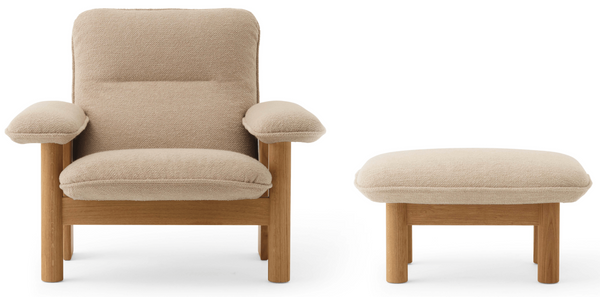
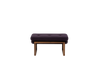
These coffee tables are low profile and create visual spaciousness while also integrating seamlessly with slimmer sofas and modular seating. One of our favorite low-profile coffee tables is the Brasilia Lounge Table from Audo Copenhagen. This table also pairs beautifully with its fellow Brasilia sofa and lounge chair.
Organic and Curved Coffee Table
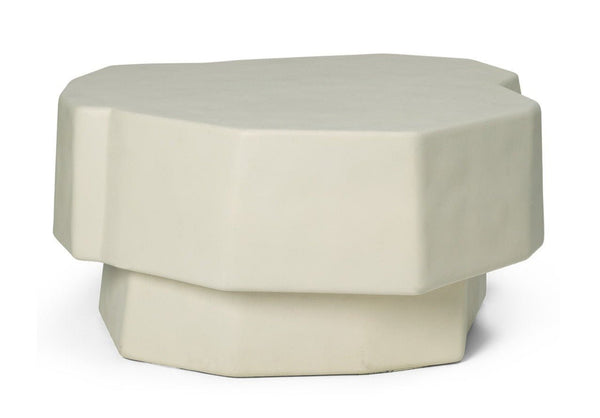
Curved and sculptural coffee tables soften squared and well-defined furniture arrangements. In rooms where there are lots of straight lines, a table with a more organic shape or a curved surface adds movement and visual contrast. Blur the boundary between function and art by introducing fluid, organic shapes into the space through the coffee table.
Design features:
- Rounded edges
- Sculptural bases
- Irregular tabletops
Why it works:
Curved forms balance sharp architectural lines and create a more relaxed, inviting seating area. They add a simple warmth and a relaxing presence in rooms that might be stricter. One of the best tables in this category is the Isola Coffee Table.

Mixed-Material Surfaces
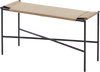
Mixing wood with metal or stone with glass adds depth and sophistication without visual clutter. Contemporary and iconic designers understood this art of mixing materials and did it masterfully in a variety of modern and Mid-Century coffee tables. If you have a space where you are relying heavily on one material as a base, a mixed-material coffee table is the perfect accent.
Design features:
- Wood and stone pairings
- Metal accents
- Contrasting textures
Why it works:
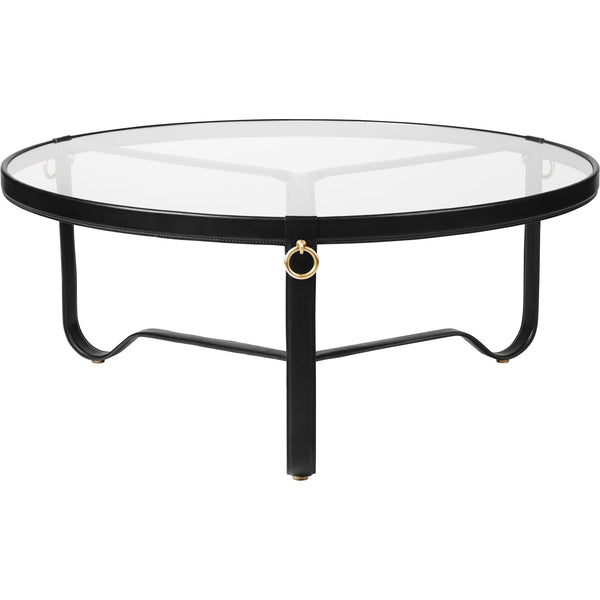
Material juxtaposition creates visual interest while allowing the piece to coordinate with diverse décor elements. Complementing materials come together to help you tell a story and create depth without requiring more than one piece of furniture. A beautiful mixed-material coffee table is the Gubi Adnet Coffee Table which mixes leather, brass, and glass.

Glass and Transparent Designs
If you’re looking for a table that gives the impression of weightlessness, adds an elegant grace to your living room, and has design clarity, then a glass coffee table is for you. Maintaining openness and introducing light to small spaces, the transparency of glass tables allows the rug, seating, and lighting to remain visually uninterrupted.
Design features:
- Tempered glass surfaces
- Minimal frameworks
- Reflective presence
Why it works:
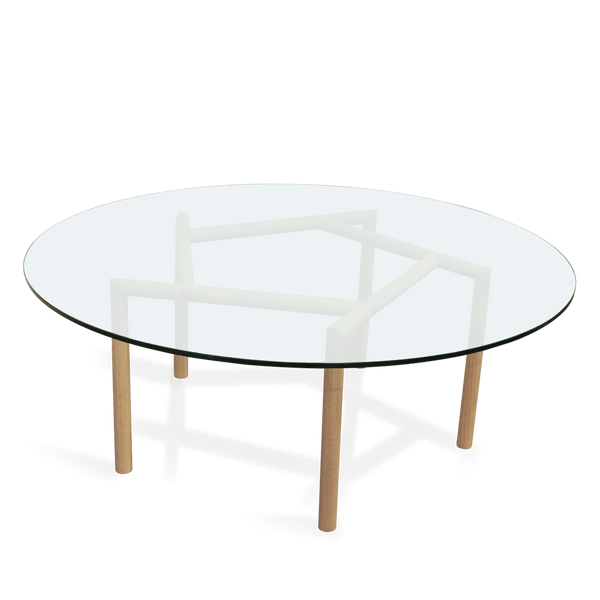
Transparency visually expands the room, especially in smaller living spaces. In apartments, lofts, basement living spaces, and corner seating areas, glass tables bring an airy lightness you can’t resist. Our favorite glass coffee table is the Tronk Gallagher Coffee Table which fits perfectly in modern and Scandinavian homes.

Nested and Modular Tables
Nested coffee tables and modular constructions respond to versatile living patterns. Easily adjusting from nights in alone to dinner parties and game nights, the nested and modular table can expand and spread or be easily packed away depending on your needs.
Design features:
- Multiple surface levels
- Tables that can slide or stack
- Expandable configurations
Why it works:
Simply, nesting allows adaptability. If you only need a small side table, you can stack them up, but if you need a larger surface area set them all out to make the most of their surface area. A fantastic nested coffee table is the CH004 Nesting Table set from Carl Hansen & Son.

Dual-Height Tables
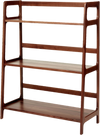
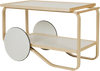
Dual-height coffee tables create dynamic layering in living room compositions. Breaking away from traditional single surface tables, these multi-level coffee tables offer practical zones for décor and utility. Use the top shelf for décor, drinks, and books, and the lower shelves for simple storage.
Design features:
- Tiered surfaces
- Asymmetric layers
- Contrasting heights
Why it works:
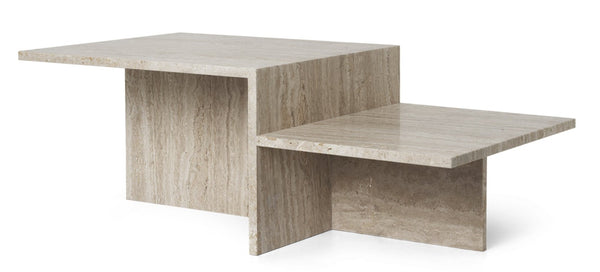
Layering height adds and visual rhythm while supporting varied functions (storage, display, surface). You can easily style these in modern interiors with a variety of decorative pieces to tell a bit of your story through a museum-like display. We absolutely love the Distinct Coffee Table and the Parallel Coffee Table as top dual-height coffee tables.

Integrating the Coffee Table into Your Living Space
And now it comes to styling your coffee table. Choose the right coffee table and integrate it into your living room by following these simple design principles.
Balance all furniture
The coffee table should feel like part of an ensemble. Match the scale with sofas and choose materials for your coffee table that complement the other pieces in the room. Everything should come together to maintain visual equilibrium no matter where you stand in the room.
Coordinate materials
Take a look at your lighting, sofa, chairs, even your hardware and curtains and then echo those materials in your coffee table and side tables. This reinforces a cohesive design language that makes your space distinct.
Consider lighting interplay
Strategic lighting — layering floor lamps, table light, and pendants — should enhance the coffee table’s surface and highlight its material qualities. This could simply be finding a great side table light that adds functionality to the space.

Styling with purpose
Use trays, curated objects, or books to personalize the surface. Be careful not to clutter it, though, and instead intentional choose each object so that it is either useful to your daily routine or just beautiful to look at.
Where to Find Modern Coffee Tables
Coffee tables remain central to living room design in 2026 because they bridge function and aesthetics. The best modern coffee table designs combine thoughtful form, superior and durable materials, and spatial responsiveness to support everyday living while enhancing the visual experience of your living space.
At HORNE, we carefully curated a large selection of coffee tables that reflect modern design values. Whether you’re looking for minimal profiles or sculptural and mixed-material pieces, each design is chosen to integrate with contemporary and Scandinavian interiors. Browse our catalogue of modern coffee table designs to ensure your living room feels intentional, cohesive, and beautifully composed.
Explore related collections, including Modern Coffee Tables, Coffee Tables, and Side Tables, and visit our design guides for a broader point of view.